Bespoke web design & development
Original visual direction, page architecture, typography and responsive layouts tailored to the artworks, artistic identity and goals of each cultural project.
Art-led website design, complete development and ongoing management — from galleries and publishing to online boutiques and cultural archives.
Transformatio Amoris conceives, develops and operates complete digital environments for artists and cultural projects. Each website is designed around its creator’s visual language, artistic ideas and body of work, rather than fitted into a generic template. The association also manages the site over time: adapting its architecture, collections, editorial presentation and commercial tools as the artist’s work and activities evolve.
Original visual direction, page architecture, typography and responsive layouts tailored to the artworks, artistic identity and goals of each cultural project.
Curated photography and painting galleries, film and music sections, journals, research, exhibition records and multilingual collections, made accessible through clear navigation.
Integrated catalogues and online boutiques for artworks, editions and books, including product presentation, ordering pathways and fulfilment coordination where appropriate.
Ongoing technical administration, updates, editorial integration, security-related maintenance and continual adaptation to new artworks, publications and phases of an artist’s career.
The website mariaalexea.com, created and operated for Maria Alexea, illustrates this approach: a continuously developed platform connecting photographic and painted works, cinema, music, books, research, editorial archives and a dedicated art boutique. Its structure, visual presentation and content evolve alongside the artist’s work.
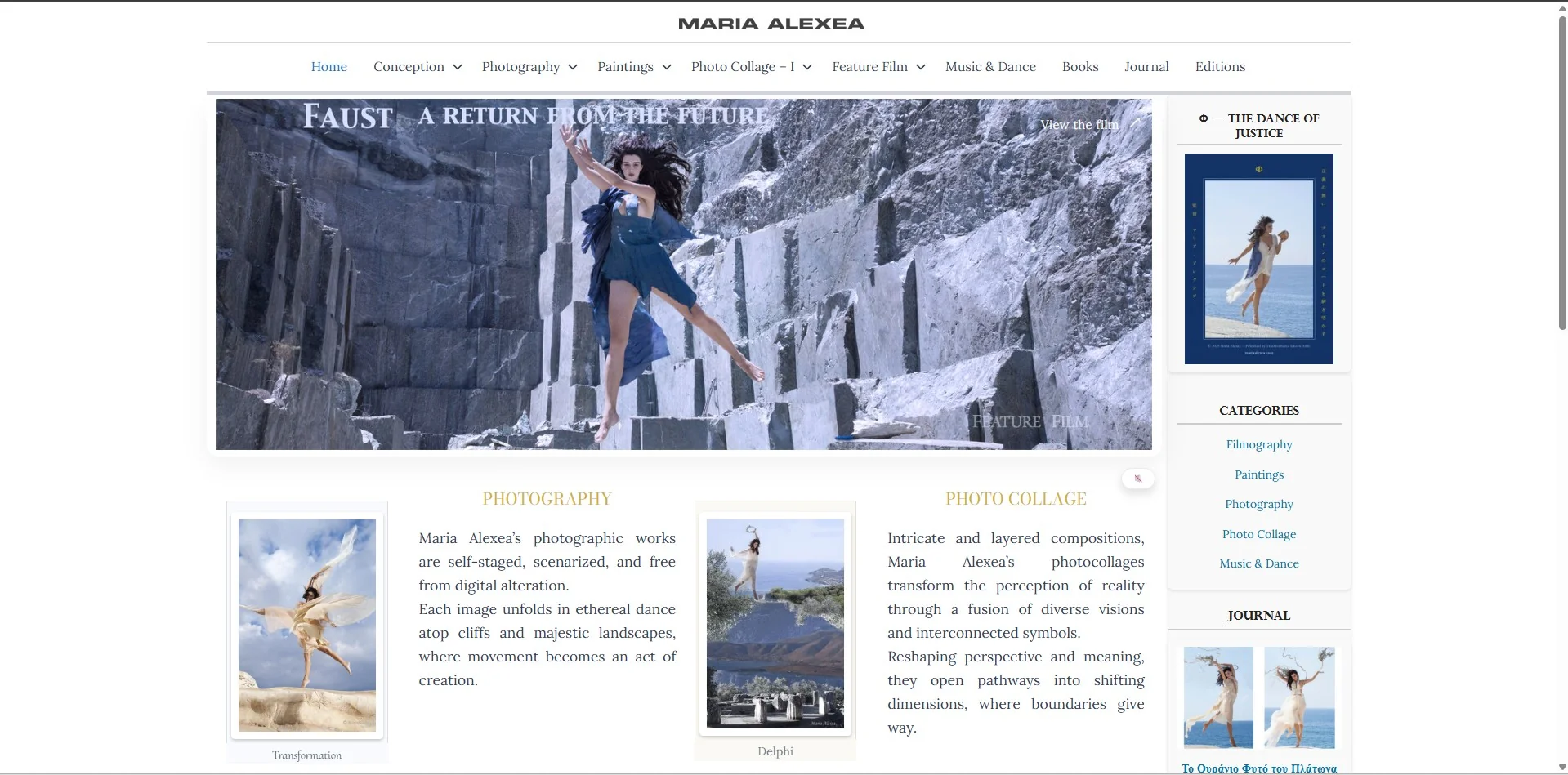
A complete, distinctive website developed and maintained around the artist’s identity, publications, artworks and new creative projects.
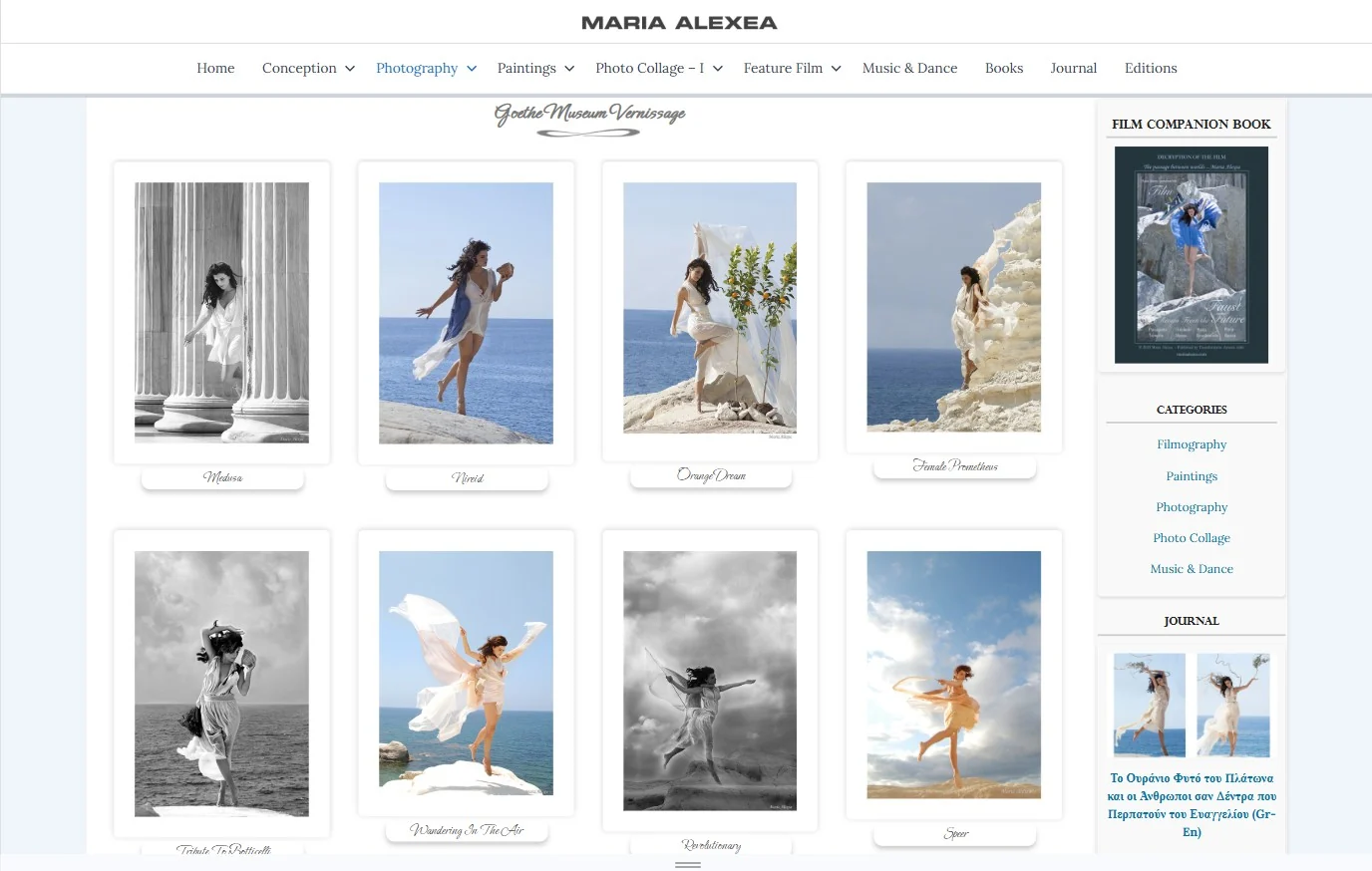
The Goethe Museum Vernissage gallery: a spacious, artwork-centred presentation with tailored image layouts, navigation and surrounding editorial context.
Beyond site creation, the association documents the life and public history of entrusted works: their origin, authorship, publication, exhibition, reception and supporting records. Digital preservation brings together the archival and editorial dimensions of cultural memory.
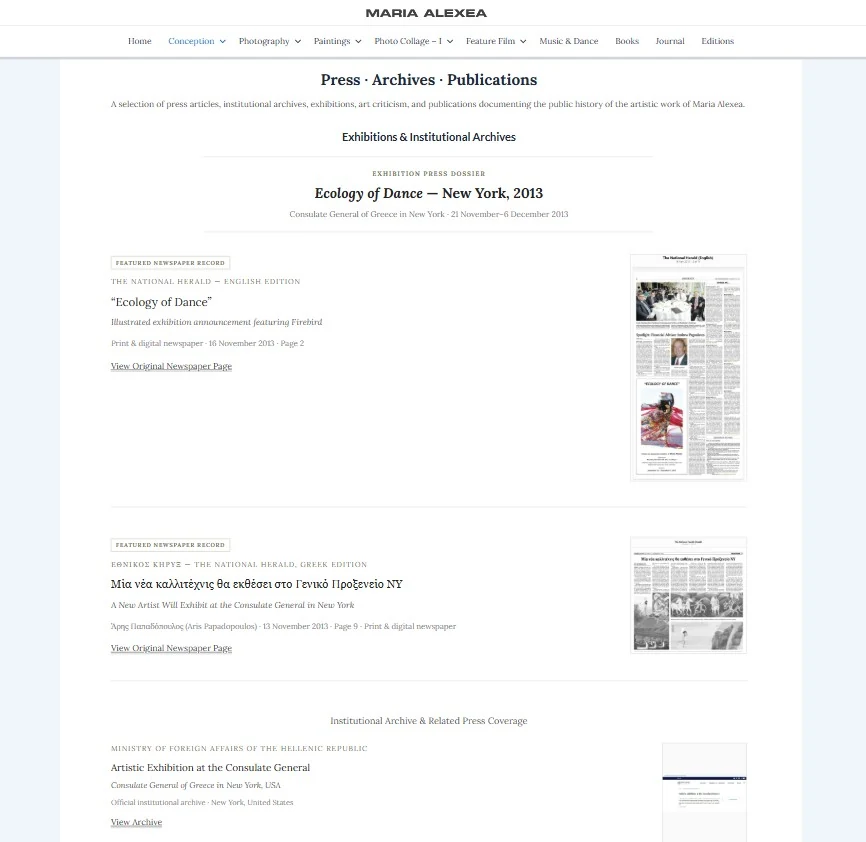
Documentation helps keep the history and context of a work accessible to future audiences and researchers. Work may include cataloguing, digital presentation, source verification and careful records of publication and exhibition.
Where entrusted with the necessary authority, Transformatio Amoris may also support attribution and rights protection through evidence preservation, notices and coordination with qualified specialists.